
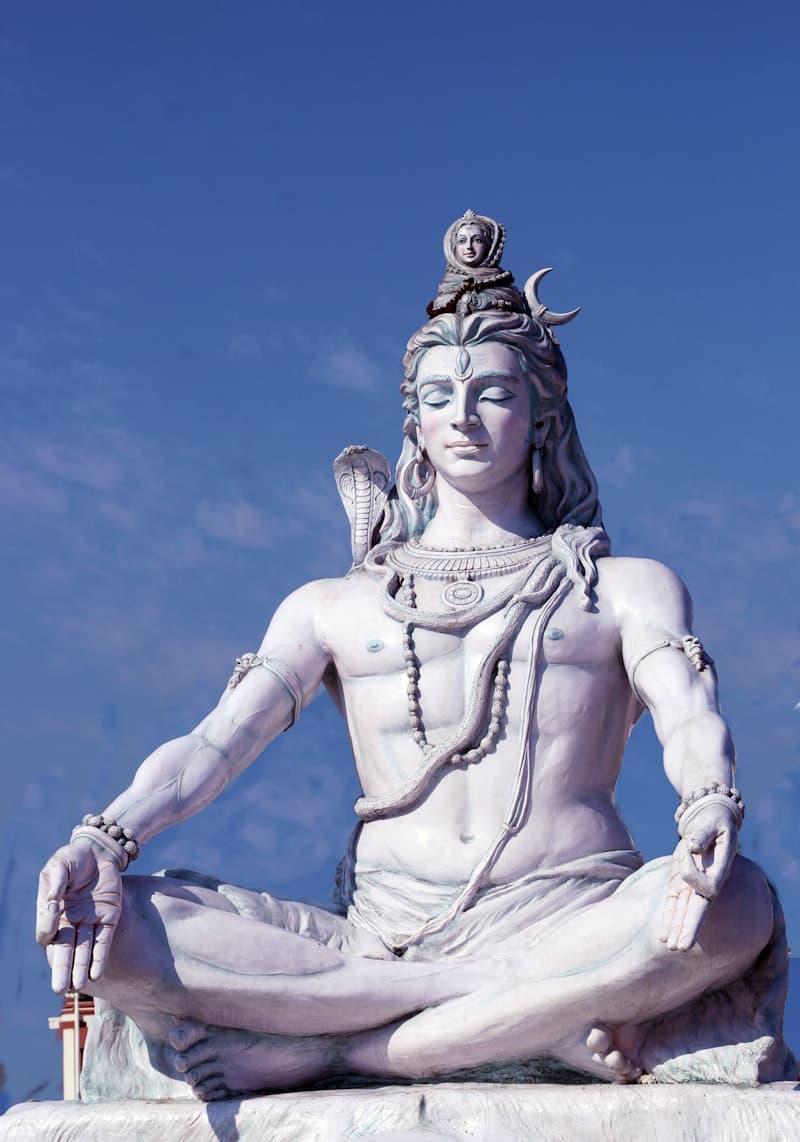
"Om Tryambakam Yajamahe..." — every word holds the secret of life, death and liberation. Discover the full meaning and correct chanting method.
The Mahamrityunjaya Mantra
Om Tryambakam Yajamahe Sugandhim Pushti-vardhanam | Urvarukamiva Bandhanan Mrityor Mukshiya Mamritat ||
This mantra was received by Maharishi Vashistha in the 7th Mandala of the Rigveda and was later included in the Yajurveda. It addresses Shiva in His aspect as the conqueror of death.
Word-by-Word Meaning
Tryambakam = three-eyed one (Shiva); Yajamahe = we worship; Sugandhim = fragrant (life-giving force); Pushti-vardhanam = the one who increases nourishment.
Urvarukam = cucumber; Iva = like; Bandhanan = from bondage; Mrityoh = from death; Mukshiya = liberate; Ma = not; Amritat = from immortality (moksha).
The Full Meaning
We worship three-eyed Shiva who pervades life like a fragrance and increases our nourishment. O Lord — just as a ripe cucumber separates effortlessly from its vine, so too release us from the bondage of death. But do not deprive us of immortality (liberation).
This prayer does not ask "don't let me die." It asks: "free me from the fear of death and grant me moksha." This is the greatness of this mantra.
Why the Cucumber Metaphor?
The cucumber is a remarkable metaphor. While raw, it clings to its vine. When fully ripe, it detaches naturally — no force needed. The ideal form of death is similar: when a soul has fully ripened, death is simply a natural transition.
This metaphor teaches us to see death not with fear but as a form of maturation — the completion of a life fully lived.
Chanting Method and Benefits
Chanting on a Rudraksha mala is ideal. Brahma Muhurta (90 minutes before sunrise) is the most auspicious time. The minimum count is 108 repetitions.
For serious illness, fear of accident or a loved one's sickness, an anushthana of 1.25 lakh repetitions of the Mahamrityunjaya is performed — collectively, by learned priests over several days.